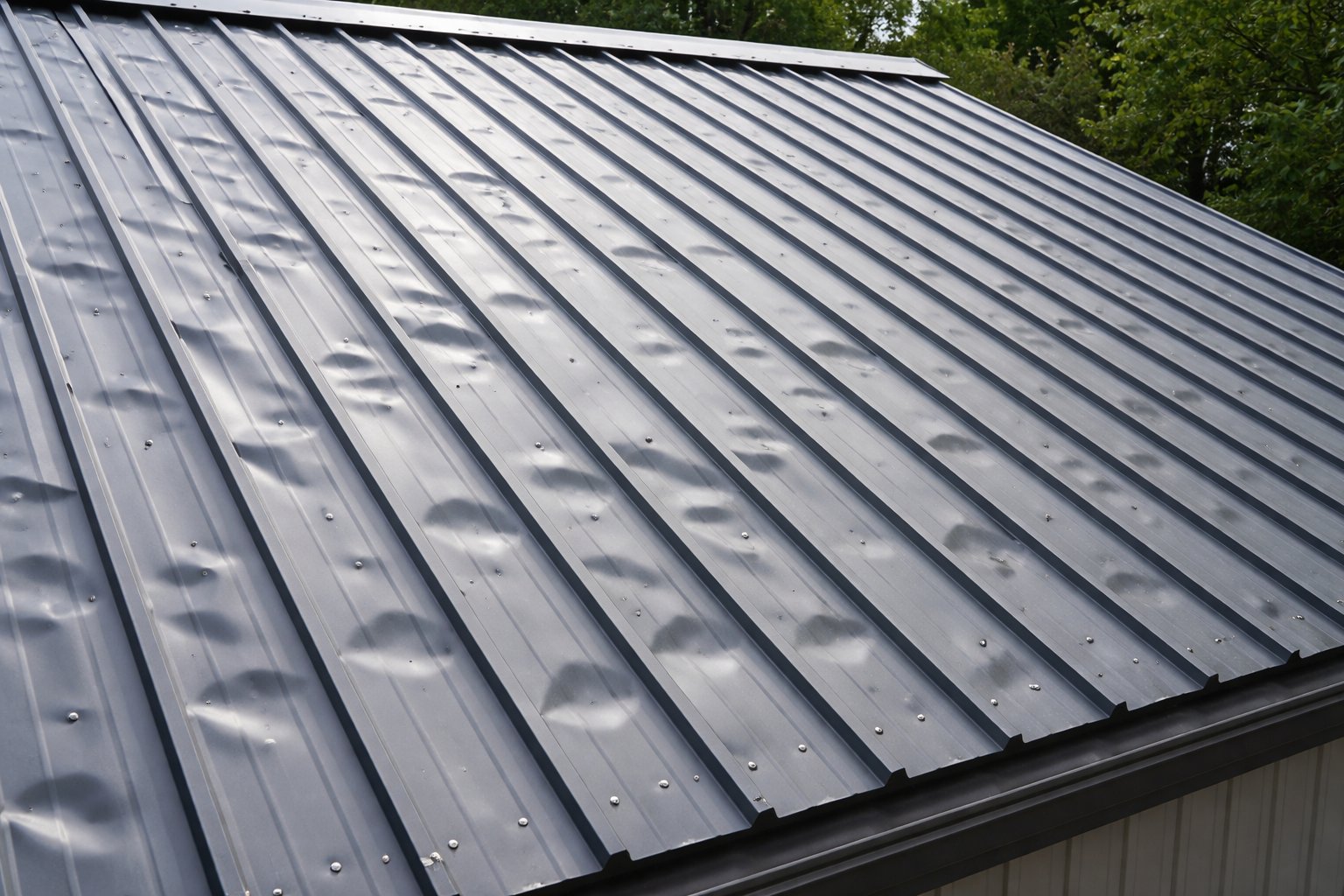
After a hailstorm, it's common for a metal roof to come away covered in dents, and understandably, for the owner to assume the whole roof now needs replacing. BlueScope, the manufacturer of Colorbond and Zincalume steel, addresses exactly this question directly in Technical Bulletin TB-32, "Impact of hail damage to exterior BlueScope coated steel products," and the answer is more nuanced than "any dent means replacement."
The Core Distinction: Cosmetic vs Functional Damage
TB-32 draws a clear line between two categories of hail damage. Loss of paint from the topcoat at the point of impact is treated as cosmetic, BlueScope states it has no appreciable effect on the product's corrosion performance, since the underlying metallic coating still provides protection. Dents and indentations, on the other hand, only become a genuine concern in specific circumstances: where they cause water to pond on a low-pitched roof, or where they deform the overlap between sheets in a way that compromises the anti-capillary action the overlap is designed to provide. Ponding itself is a broader roofing issue in its own right, covered in our piece on water ponding on flat roofs.
What This Means for an Assessment
A proper hail damage assessment doesn't just count dents, it checks whether any of them fall into the functional category TB-32 describes: are they causing ponding, and have any affected the sheet overlaps in a way that risks water ingress or accelerated corrosion at that point. Sheets identified with this kind of functional damage should generally be replaced, per TB-32's own guidance, while purely cosmetic dents and paint loss typically don't require replacement on durability grounds, though they remain a legitimate consideration for an insurance claim where appearance and property value are part of the assessment.
Why Touch-Up Paint Isn't the Answer
TB-32 also specifically advises against using touch-up paint to address surface damage, consistent with BlueScope's separate guidance in Technical Bulletin TB-2 on coating repair. Painting over minor paint loss doesn't restore the original coating system's performance and can create a false impression that the damage has been properly addressed.
Where This Fits an Insurance Claim
Because coverage and payout amounts often hinge on whether damage is assessed as functional or purely cosmetic, an independent assessment referencing TB-32's actual criteria, rather than a general visual impression, gives both the homeowner and the insurer a defensible basis for the claim. See our piece on structural engineer reports for insurance claims for what that documentation generally needs to include. Corrosion, rather than impact, is the other common Colorbond dispute, and our piece on whether roof corrosion is a warranty claim or a maintenance failure covers how BlueScope's own terms draw that line.