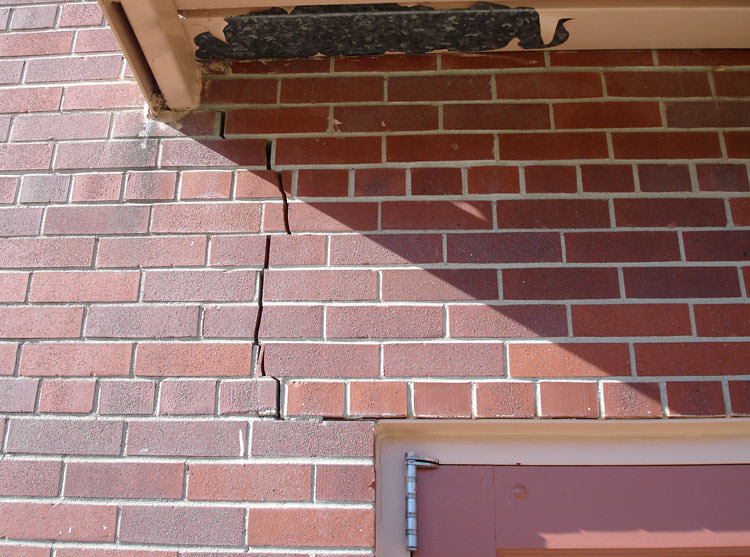
Door and window openings interrupt the continuous line of a wall, which concentrates stress at their corners whenever the structure around them moves. That's why cracking so often shows up there first, and why the combination of visible cracking with a door or window that's started binding, dragging, or no longer latching properly is a more reliable indicator of structural movement than cracking alone.
Why Openings Crack First
A wall without an opening distributes movement-induced stress relatively evenly. Introduce a door or window opening and the frame around it becomes the weak point, any differential movement in the footing beneath the wall concentrates as diagonal cracking radiating from the top or bottom corners of the opening. This is a well understood mechanism in residential construction and is one of the reasons AS 2870, the Australian Standard for residential slabs and footings, and general good practice under the National Construction Code both place importance on how footings are designed to limit differential movement in the first place.
Why the Door or Window Itself Matters
A frame that's racked even slightly out of square, because the wall around it has moved, changes how a door or window sits and operates. Common symptoms include a door that used to close easily now needing a shove, a door that swings open or shut on its own, a window that's become difficult to open or won't latch, or a visible gap appearing between a door and its frame on one side while closing tight on the other. On their own, any one of these could have a mundane cause like humidity affecting timber. Paired with visible cracking at the same opening, they point more clearly toward the wall itself having moved.
What to Do About It
Photograph the crack and note when the door or window issue started, that timeline is genuinely useful information for an assessment. If the combination is new or getting worse, it's worth having looked at rather than simply planing down the door or repainting over the crack, since treating the symptom without understanding the cause tends to mean the same issue reappears. See our broader guide on when to call a structural engineer for cracks for how this fits into a wider decision about urgency, or our guide on whether a crack is actually structural for the fuller picture.